Energy fuels the U.S. military mission, but diesel generators require a long logistics tail that costs time and can risk soldiers’ safety. The U.S. Army needed a resilient, swiftly deployable energy source for wherever needed, including remote bases, harsh environments and disaster response.

Enter Project Pele: a transportable nuclear power system designed by BWXT and sponsored by the U.S. Department of War’s Strategic Capabilities Office. The Pele microreactor:

  • Powerful: Generates at least 1.5 megawatts of always-on electricity,
  • Compact: Fits inside a standard 20-foot shipping container, and
  • Agile and Tough: Is light enough and robust enough to be transported by plane.

Built Tough, Army Strong

Once deployed, the Pele microreactor will generate resilient baseload power for contested environments and other mission-critical military needs.

Tough enough to get to the point of need: 
Designed to meet rigorous shock and vibration requirements, the Pele system provides flexibility for transport by truck, train and airplane.

Strong and Compact:
The reactor and power systems fit inside four standard 20-foot shipping containers and deliver 1.5 MW of reliable, pollution-free electricity.

Reduces long logistics tail: 
The Pele system cuts down on the time, effort and risk of securing and transporting fuel for diesel-powered generators, offsetting up to
1.5 million gallons of diesel and eliminating hundreds of fuel truck deliveries each year.

Expands mission-critical supply chain: 
The Pele system broadens the Gen-IV reactor supply chain while maintaining the highest safety and quality standards.

On Track to Deliver

With manufacturing already well underway, Pele will be the first fully tested advanced microreactor power generation system to power Army  equipment and meet the Sept. 30, 2028, deadline for Executive Order (EO) 14299, “Deploying Advanced Nuclear Reactor Technologies for National Security.”

Why Project Pele Matters

The mission for BWXT: design, build and test a completely integrated and functioning reactor prototype – not just a reactor physics test or minimally viable product for low-power testing. Once complete, the Pele reactor will deliver baseload power for the Department of War’s most mission-critical efforts and operations – but it doesn’t stop there.

The benefits of Pele also extend to the nuclear industry at-large:

  • Proves a high assay low enriched uranium (HALEU) transportable nuclear power plant is possible while meeting stringent size, weight and safety constraints
  • Advances High Temperature Gas Reactor (HGTR) technology
  • Demonstrates the regulatory process at a national laboratory (Idaho National Lab)
  • Expands the nuclear supply chain
  • Proves the flexibility of TRISO fuel in a new reactor design

BWXT's Role

The Pele prototype is designed and manufactured at BWXT’s Innovation Campus in Lynchburg, Virginia, a state-of-the-art facility that brings together scientists, engineers and makers who execute new nuclear and first-of-a-kind projects to completion.

BWXT’s expertise and experience are foundational to Project Pele’s success:

  • Decades of experience manufacturing nuclear fuel utilizing our two Nuclear Regulatory Commission Category 1-licensed facilities and over 20 years of experience manufacturing TRISO.
  • Major nuclear component manufacturing experience, from steam generators to the first SMR pressure vessel manufactured in North America.
  • Over 70 years’ experience supplying nuclear reactors and fuel to the U.S. Navy.

Smart Engineering

Pele is a revolutionary Generation IV high-temperature gas-cooled reactor (HTGR), rooted in proven technologies. Achieving its compact size and high-power output demanded rapid, cutting-edge innovation across multiple areas, including:

  • Digital Twins: Designed with advanced engineering and simulation tools, captured as a digital twin during manufacturing and construction
  • Advanced Materials: Developed with lightweight, high strength metals to meet demanding weight and size requirements ready for the advanced reactor market
  • Mass Production: Created with state-of-the-art precision tooling to meet the unique requirements, while ensuring repeatability for future builds
  •  

Fueled by TRISO

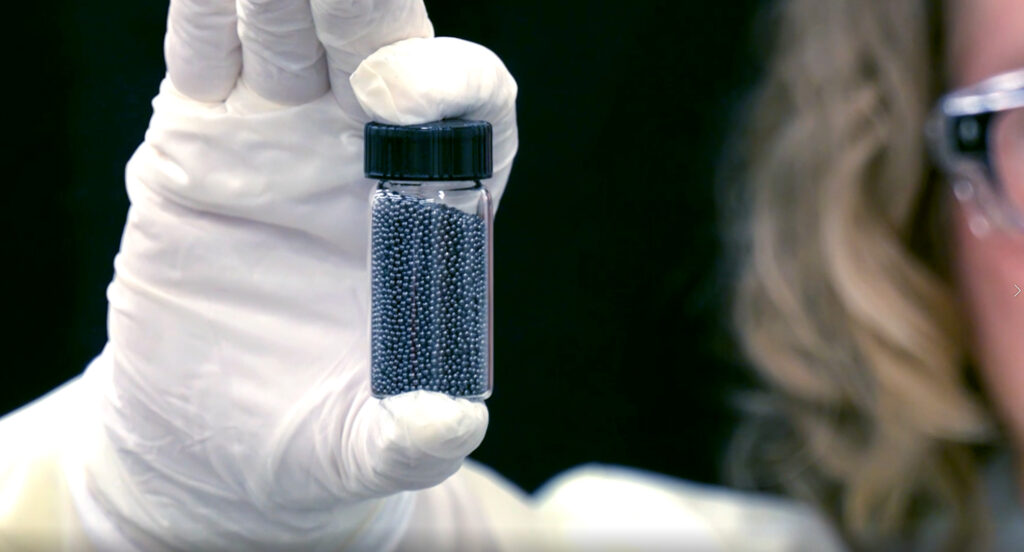
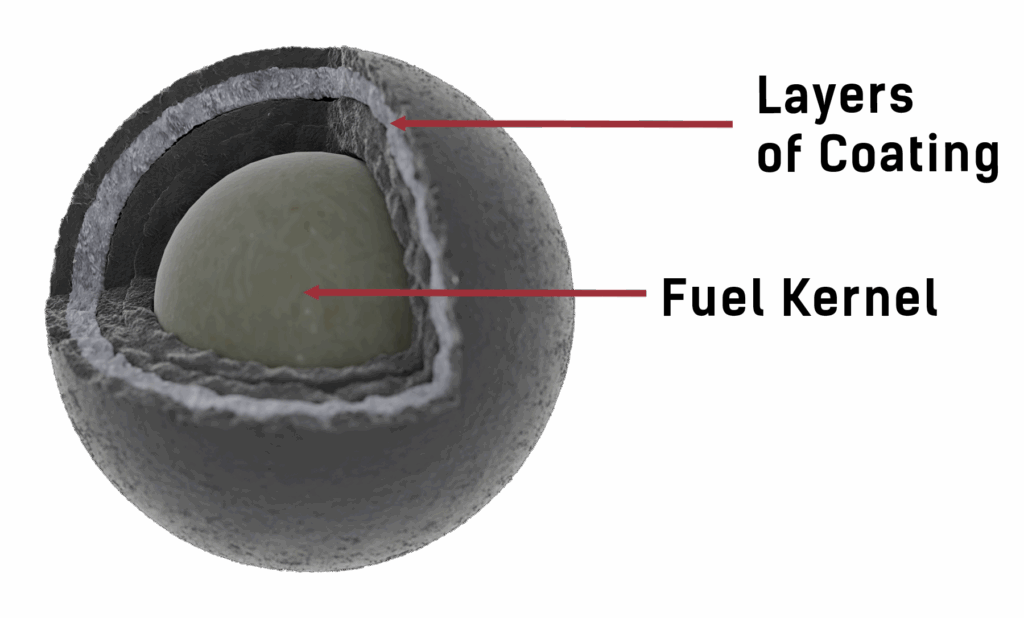
The Pele microreactor is powered by TRi-structural ISOtropic (TRISO) fuel, known for its advanced safety and output efficiency. Each poppyseed-sized uranium kernel is encased in a multi-layered, high-density ceramic shell, capable of withstanding extreme temperatures and corrosion, providing robust safety and reliability.

TRISO Cross-Section

Rapid Advancement

In just three years, BWXT advanced Project Pele from contract award to reactor fabrication and initial fuel delivery. As the prime integrator, BWXT is demonstrating unparalleled speed in design, development and manufacturing of microreactors and TRISO fuel.

June 2022

Awarded contract by Strategic Capabilities Office to build and deliver Pele prototype.

Dec 2022

Department of Energy authorized BWXT to begin ordering long-lead items; TRISO fuel manufacturing began.

August 2024

System design
review completed.

July 2025

Core assembly
production began.

Nov 2025

TRISO fuel production completed for initial core load.

Next Steps:
Marching Towards Delivery

The PELE reactor will ship from BWXT’s Lynchburg facilities to Idaho National Laboratory. Once loaded with BWXT-produced TRISO fuel, the system will face rigorous demonstration tests to confirm its operational performance in simulated real-world operational conditions.

Leading the Way with Participating Organizations

BWXT serves as the lead contractor for Project Pele and collaborates with best-in-class organizations for the complete powerplant: 

Design and build of the thermal and power conversion modules and electrical delivery systems.

Rolls-Royce LibertyWorks:

Design and build of the Pele control module, plant instrument and control systems, and semi-autonomous controls.

Northrop Grumman:

Module transportation and logistics.

Torch Technologies:

This Website Uses Cookies.

We use cookies to give you the best user experience. No personal information is collected in this process.