











The Army’s Janus program is ushering in a new era for energy resilience on military installations. Janus pairs multiple vendors with bases across the country to deliver safe, secure and reliable nuclear power that strengthens national defense and helps revitalize American industrial capacity. It is a milestone driven program designed to accelerate next generation energy solutions and keep the United States ahead of global competitors.
The Janus program is structurally configured for rapid deployment and fast learning cycles. For the first time DOE/NRC and the Army Reactor Office are working from shared processes and subject matter experts, thereby reducing redundancy, and accelerating future commercial licensing. Janus is the inflection point the microreactor industry needs.
BWXT’s Advantage Begins With Expertise
BWXT brings several years of progress on Project Pele and the BANR commercial reactor to the Janus program. BWXT has spent years designing, testing and proving components with Idaho National Lab, and has already delivered the fuel, engineering and licensing basis for Project Pele. The BANR reactor scales that design to 20MWe, providing a highly differentiated product.
A Design That Fits Real Requirements
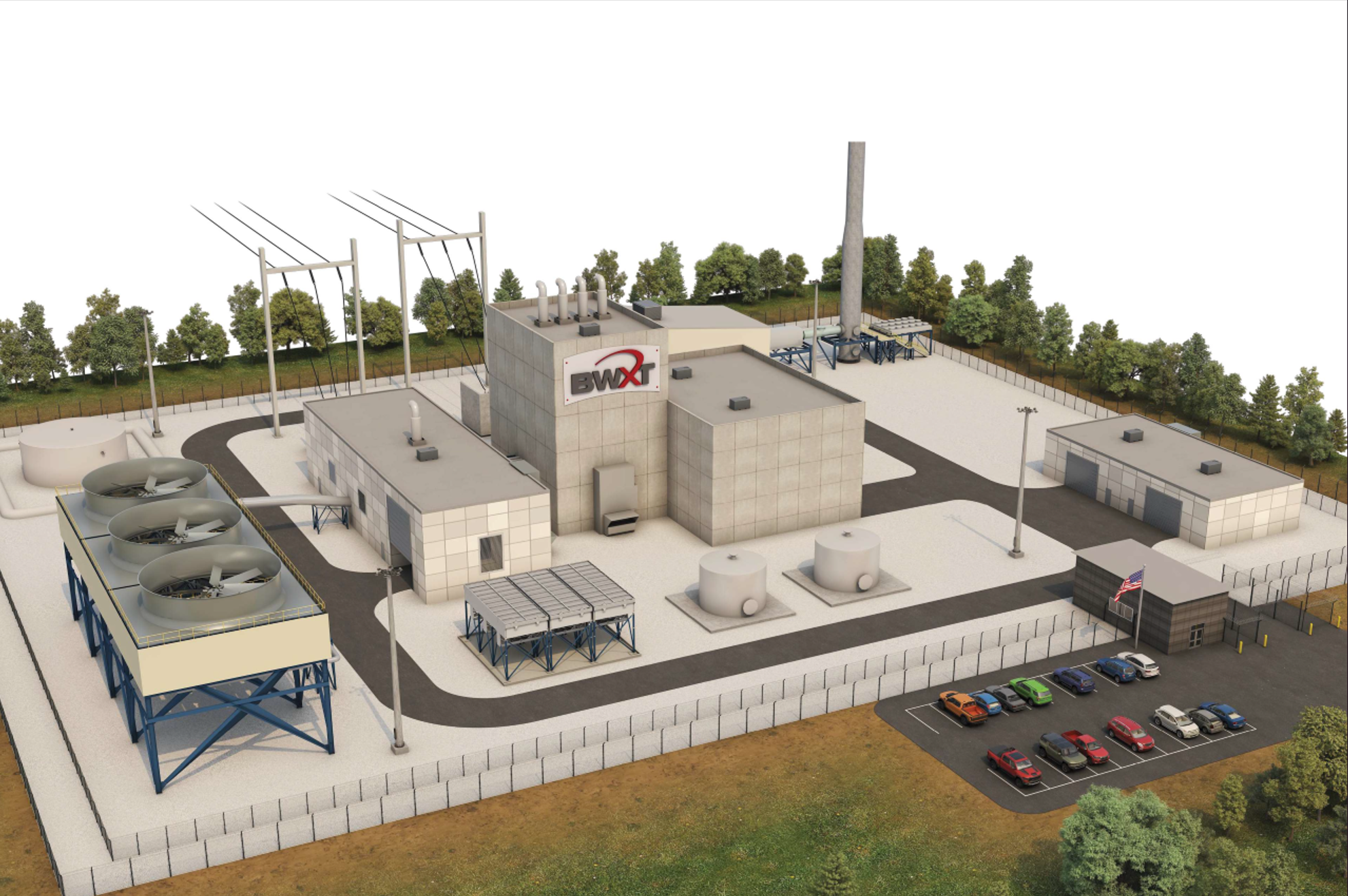
Janus is about delivering real power to real bases. BWXT’s BANR reactor hits the target perfectly with 20 MWe of output that aligns with the double-digit loads seen across Army installations. Fort Campbell, Kentucky, offers an ideal match between base demand and reactor capability. At this aligned site, BWXT will deploy with a utility partner that brings operational expertise, training capability and community engagement knowledge to support successful long-term operations.
Janus Provides BWXT Additional Momentum
Janus establishes the first real pathway to microreactor deployment. BWXT brings the experience, factory capability, fuel pipeline and proven reactor designs needed to make deployment successful.
This is the moment when the United States moves from prototypes to commercially ready microreactors. It is the moment when defense and industry grow together. It is the moment when leadership matters.
BWXT is setting the pace.

Some people may not know this, but BWXT has a dedicated Digital Center in Melbourne — and it’s quickly become the hub for how we accelerate our digital transformation.

We chose Melbourne with clear intent. It gives us proximity to customers and partnerships that matter, access to exceptional digital and engineering talent and a vibrant tech community that understands the importance of mission driven innovation.
Melbourne, Florida is the right environment to take our digital strategy from vision to execution.
At the MDC, we’re focused on work that has real impact across the business — modernizing core systems, making every factory data driven, advancing AI and automation, improving operations and strengthening cybersecurity. It’s become the epicenter for delivering digital initiatives at scale.

The team here works shoulder-to-shoulder with the business, driving digital technologies forward in a very hands-on way. We’re close to the challenges and even closer to the outcomes. And people who join us don’t wait long to see impact — they contribute from day one.
Melbourne gives us the talent, focus and momentum we need to accelerate the digital capabilities that support our mission. It’s why we built this hub — and why I’m excited about what we will enable.
Across the nuclear and advanced manufacturing sectors, one thing is clear: organizations that modernize their digital foundations today will lead their industries tomorrow. At BWXT, we’re leaning into that momentum with purpose.
Our goal is simple and bold: accelerate BWXT’s future with a modernized, AI enabled digital backbone driving smarter, faster performance.
To get there, we’re focused on four core priorities:
• Modernizing our core business systems to unlock faster workflows and provide real-time insights.
• Delivering a connected digital factory, that increases production visibility and reduces the cost of poor quality through smarter, more integrated systems.
• Advancing toward AI enabled processes that streamline complexity, elevate decision making and strengthen our competitive advantage.
• Building stronger IT resilience with AI powered security, intelligent infrastructure and modernized cloud capabilities.
This critical moment matters.
As our work becomes more complex and more essential, the reliability of our digital backbone will define how effectively we execute.
We’re building a foundation that supports our people, strengthens our mission, and positions BWXT for a faster, smarter, more resilient future.
Some people may not know this, but BWXT has a dedicated Digital Center in Melbourne — and it’s quickly become the hub for how we accelerate our digital transformation.
We chose Melbourne with clear intent. It gives us proximity to customers and partnerships that matter, access to exceptional digital and engineering talent and a vibrant tech community that understands the importance of mission driven innovation.
Melbourne, Florida is the right environment to take our digital strategy from vision to execution.
At the MDC, we’re focused on work that has real impact across the business — modernizing core systems, making every factory data driven, advancing AI and automation, improving operations and strengthening cybersecurity. It’s become the epicenter for delivering digital initiatives at scale.
The team here works shoulder-to-shoulder with the business, driving digital technologies forward in a very hands-on way. We’re close to the challenges and even closer to the outcomes. And people who join us don’t wait long to see impact — they contribute from day one.
Melbourne gives us the talent, focus and momentum we need to accelerate the digital capabilities that support our mission. It’s why we built this hub — and why I’m excited about what we will enable.
The world is entering a decisive era for clean and reliable energy. More than 40 countries are looking to expand nuclear power, and global investment may need to double to more than US$120 billion annually by 2030.
The question for Canada is whether we intend to lead growth or be left behind. The federal government’s new Nuclear Energy Strategy signals that Canada intends to lead, but national leadership will not be enough unless provinces join that effort with purpose.
Canada has everything it needs to compete at the front of this global wave. We have high-grade uranium in Saskatchewan, fuel processing and major component manufacturing in Ontario, and a highly capable workforce. Few countries have this kind of integrated capacity.
The value of Canada’s nuclear supply chain is often reduced to a number, usually the approximately 100,000 people it employs. Of course, jobs matter. But the true value of Canada’s nuclear industry is sovereign control over one of the most strategic technologies in the world.
We do not maintain a navy because it employs a lot of people. We maintain it because sovereign countries with coastlines need one. Likewise, we should not measure the value of an advanced nuclear industry by counting workers. We should measure it by asking whether we want to remain one of the few nations that can design, build, install and service nuclear reactors.
Nuclear power provides over half of Ontario’s electricity and roughly 15 percent of Canada’s overall power. Manufacturers, mines, AI data centres, farms, transit systems and hospitals all depend on this reliable power.
Canada’s nuclear industry also creates disproportionate economic value. Its workers hold among the highest-value manufacturing and engineering jobs in the country. They support key technologies and skills for the future including advanced welding, metallurgy, robotics, forgings, digital manufacturing, controls, software and precision machining.
In addition, the nuclear supply chain that keeps reactors running underpins the infrastructure that keeps the modern economy operating also drives significant exports. Canada is one of a very small number of countries that can deliver nuclear technology from fuel to components to reactor services. Treating this asset as something that can be outsourced is a serious mistake.
Nuclear capabilities are essential for energy security. Reactors last 60 to 100 years. A country that relies on foreign suppliers to maintain them risks losing control of critical infrastructure. Domestic capability ensures that life extensions, refurbishments, component manufacturing and emergency response remain in Canadian hands. We would never give up the domestic ability to maintain our naval fleet. Why would we do so for our nuclear fleet?
Just as important, this is a platform for future growth. The same supply chain that delivers today’s reactors positions Canada to compete globally in emerging technologies like small modular reactors (SMR), medical isotopes, fusion components and clean energy exports. Protecting our capability today is how we create tomorrow’s industries.
This brings us back to the federal Nuclear Energy Strategy. It lays out a serious vision for national ambition, but success now depends on the provinces. Ontario is advancing some of the most significant nuclear projects in the world. Saskatchewan and Alberta are exploring new technologies. New Brunswick has long-standing expertise and emerging SMR potential. Quebec and Nova Scotia rely on electricity systems that will need serious reinforcements to meet climate and reliability targets. Yet without coordination across provinces, Canada risks diluting its advantage.
A fragmented approach spreads resources too thinly and drives up costs. A coordinated national effort, supported by provinces working toward common technology choices and project structures, gives Canada the scale to compete globally. Fleet-style deployment allows companies to invest with confidence, build assembly-line manufacturing capacity and improve workforce training.
The sovereign, strategic choice for Canada is to maintain a domestic nuclear supply chain. We simply cannot afford to lose this globally rare advanced industrial capability. While importing nuclear tech may appear cheaper in the short term, it would also eliminate the domestic capability to keep our reactors running and our economy powered.
Canada has a rare opportunity, but it needs to be an all-hands, all-provinces effort. If we act with unity, we can secure clean electricity, protect sovereign capability and strengthen one of the most valuable industrial assets in the country.
A simple truth: energy demand keeps climbing.
Here’s another: organizations need dependable, low carbon power that won’t bail when things get tough. Industries are electrifying, grids are feeling the strain, and customers are looking for solutions that deliver rock solid reliability without cranking up emissions.
Enter BWXT’s BANR microreactor.
You may not have heard of it and that’s OK. BANR stands for BWXT Advanced Nuclear Reactor (number one reaction: “oh, is that what it means?”).
But seriously, it’s built for exactly this moment, not a sci-fi dream or a “maybe someday” engineering sketch, but a practical microreactor grounded in decades of real nuclear experience.
BANR combines proven technology with modern design and a factory-built approach that’s more “let’s do this now” than “check back in 20 years.” Whether it’s government (military installations), industry (power + heat) or remote operations (mining), BANR is engineered for the jobs that can’t afford downtime.
Let me share a bit more insight: BANR is a High Temperature Gas Cooled Reactor (HTGR) that uses nitrogen as coolant and graphite as moderator which makes it a steady, predictable and flexible power source built around what customers actually need:
BANR is designed for organizations that need continuous, resilient power and heat: mining operations, manufacturers, chemical facilities, data centers and isolated sites that can’t just “try turning it off and back on.”
BANR delivers electricity and high temperature process heat, offering strong efficiency and stable costs for customers juggling rising energy prices and decarbonization goals.
Many advanced reactor concepts hit the brakes at manufacturing. BANR avoids the traffic jam entirely. BWXT has decades of experience producing nuclear components, steam generators, TRISO fuel and whole reactor systems. The supply chain is already humming: established vendors, specialized facilities and factory ready tooling are in place today.
BANR’s modular design and use of commercial off-the-shelf components mean scalable, efficient production and predictable delivery, not just for the first unit, but for repeatable builds that don’t reinvent the wheel every time.
At the heart of BANR is TRISO fuel, tiny ceramic coated particles known for their durability and tested performance.
TRISO keeps its structure under extreme conditions, basically the “calm under pressure” type you want in a nuclear fuel. This “calmness” makes TRISO fuel safer because each particle has built-in, multilayer containment to keep each tiny fuel particle stable.
Better yet, BWXT already manufactures TRISO at scale. This isn’t experimental or hypothetical, it’s been tested, validated and produced for multiple advanced reactor programs.
That 20+ years of BWXT TRISO experience strengthens BANR’s design and safety case.
Advanced nuclear needs more than bold ideas: it needs proven fuel, manufacturing muscle and designs that work in the real world.
BANR brings those pieces together. It’s safe, efficient, reliable and built for customers who cannot afford power interruptions.
Advanced nuclear doesn’t have to be theoretical, it can be practical, reliable and ready.
Watch this space. BANR is where clean energy gets real.
The Apollo landing showed the world what determined teams can accomplish, and today we stand at the edge of a new leap. As Artemis prepares to return to the moon in 2028, BWXT’s heat treatment of solid rocket booster engine components for the recent Artemis II mission reflects our deeper role in the long-term effort to establish a sustainable lunar base.
As we expand lunar exploration and prepare for sustained lunar operations, we need reliable power that works through long nights, harsh temperatures and dust, which has traditionally limited solar energy.
Our space nuclear power systems are designed to provide reliable, continuous electrical power for missions beyond Earth. From enabling sustained surface operations on the Moon to supporting advanced on-orbit capabilities, these systems deliver the resilient energy needed for critical mission functions - including life support, in-situ resource utilization, mobility, communications, and future exploration infrastructure.
The next lunar chapters will be written not just by rockets, but by the power systems that enable life and work on the surface. At BWXT, we stand ready to deliver the technologies needed for long-term sustained habitation on the moon and beyond.
Every advanced reactor developer faces a common set of challenges: proving safety, meeting performance targets and gaining regulatory confidence without slowing down innovation.
TRISO fuel turns those challenges into advantages by adding a reliable, particle‑level safety barrier that supports safer, more flexible reactor designs. Each fuel particle contains its own miniature containment system made of ceramic and carbon layers, giving advanced reactors a built‑in safety margin that performs even under extreme conditions.
When the fuel works this reliably, projects can advance toward higher performance and quicker deployment with confidence.
TRISO’s passive safety behavior is one of its most significant advantages. Because each particle acts as its own containment system, TRISO provides a large safety margin because the fuel can stay intact even in severe accident conditions well above normal operating temperatures.
This gives developers wider operational flexibility and simplifies the engineering challenges that come with advanced reactors. It also allows new designs, such as high temperature gas cooled reactors, molten salt cooled reactors and microreactors to achieve performance goals while still meeting rigorous safety expectations.
BWXT’s manufacturing capabilities bring TRISO’s advantages into practical application. At our NRC Category 1 licensed facility in Lynchburg, Virginia, we have spent decades refining the processes required to fabricate, coat and inspect each particle with consistency.
Production-scale capability is not a theoretical milestone for us. It is something we have demonstrated through programs like the Department of Energy’s Advanced Gas Reactor initiative and in national security projects such as Project Pele. These efforts show that while we reliably produce TRISO at scale today, we’re already engineering the next generation of manufacturing processes to achieve greater throughput and improved cost performance.
As advanced reactor activity accelerates, collaboration is key. BWXT works alongside developers and national laboratories to qualify fuel for new reactor concepts and prepare for commercial deployment. These partnerships help refine fabrication methods, validate performance and ensure a stable supply chain.
The larger story is that nuclear energy’s future is being built in real time. Reactors are advancing through testing. Supply chains are expanding. Fuel systems like TRISO are proving that innovation and safety can progress together. With every batch we produce and every reactor milestone we reach, we are showing what it looks like to propel nuclear forward with purpose.
The next chapter is not ahead of us. It is unfolding now, and it is driven by leaders committed to delivering secure, high-performance fuel for the technologies that will define the next generation of energy.
As America approaches its 250th anniversary, I’ve been reflecting on the defining moments that shaped who we are and the calls to action that moved ordinary people to do extraordinary things.
Throughout our history, America has never stood still. At every critical juncture, our country has asked its citizens to step forward, push boundaries and build something stronger than what came before.
One of the first great calls to action was the push for independence. I often think of Benjamin Franklin as a statesman and a visionary who knew declaring independence was more than a political act. It was an act of courage, imagination and belief in a better future. Franklin helped forge the spirit of a nation that aimed higher than the challenges in front of it.
Another figure I deeply admire is Marie Curie, perhaps the greatest exploratory scientist of all time. She didn’t wait for someone else to define the future; she discovered it herself and reshaped the world. Her work reminds me that science is possibility.
And then there is Admiral Hyman Rickover, father of the Nuclear Navy. In the years following World War II, as the world tried to define a new era of peace, Rickover answered the call to action that shaped our company’s destiny. He saw that lasting peace would depend on a new kind of capability: a strategic deterrent strong enough to keep our enemies at bay without ever firing a shot. He took the science of his time and transformed it into a force that has protected American freedom for more than 70 years.
Rickover’s call to action became ours. And ever since, BWXT has been a foundational part of sustaining that peace.
But today, we face a moment that is just as defining.
Across the country, and across the world, the pace of change is accelerating. The threats we face evolve every day. And once again, America needs an industrial base and a nuclear capability that is strong, resilient and ready for what comes next.
Our nation is asking us to move faster, innovate deeper, and build with even more precision and determination. And the truth is: we are built for this. Our technology, our grit, our craftsmanship and our proven technical mastery that have defined us for decades is exactly what the moment demands.
We’re expanding capabilities, modernizing how we work and pushing forward with the energy this mission requires. This is what it means to carry forward the legacy of Franklin, Curie, Rickover and everyone who shaped the world by stepping up when it counted.
Now it’s our turn. And it is happening as our nation marks its 250th year. Every weld, every inspection, every idea, every improvement all contributes to a safer country and a stronger Navy — not just today, but for generations ahead.
The next 250 years will demand new ideas, new energy, new levels of excellence, and that is exactly what BWXT has been preparing for. Together, we are building the future industrial base of this nation, ensuring the Navy’s strategic deterrent remains unmatched, continuing the work of protecting American freedom and building future products for the prosperity of humankind!
Let’s build the future worthy of America’s next 250 years.
The Army’s Janus program is ushering in a new era for energy resilience on military installations. Janus pairs multiple vendors with bases across the country to deliver safe, secure and reliable nuclear power that strengthens national defense and helps revitalize American industrial capacity. It is a milestone driven program designed to accelerate next generation energy solutions and keep the United States ahead of global competitors.
The Janus program is structurally configured for rapid deployment and fast learning cycles. For the first time DOE/NRC and the Army Reactor Office are working from shared processes and subject matter experts, thereby reducing redundancy, and accelerating future commercial licensing. Janus is the inflection point the microreactor industry needs.
BWXT’s Advantage Begins With Expertise
BWXT brings several years of progress on Project Pele and the BANR commercial reactor to the Janus program. BWXT has spent years designing, testing and proving components with Idaho National Lab, and has already delivered the fuel, engineering and licensing basis for Project Pele. The BANR reactor scales that design to 20MWe, providing a highly differentiated product.
A Design That Fits Real Requirements
Janus is about delivering real power to real bases. BWXT’s BANR reactor hits the target perfectly with 20 MWe of output that aligns with the double-digit loads seen across Army installations. Fort Campbell, Kentucky, offers an ideal match between base demand and reactor capability. At this aligned site, BWXT will deploy with a utility partner that brings operational expertise, training capability and community engagement knowledge to support successful long-term operations.
Janus Provides BWXT Additional Momentum
Janus establishes the first real pathway to microreactor deployment. BWXT brings the experience, factory capability, fuel pipeline and proven reactor designs needed to make deployment successful.
This is the moment when the United States moves from prototypes to commercially ready microreactors. It is the moment when defense and industry grow together. It is the moment when leadership matters.
BWXT is setting the pace.
Driven by decarbonization goals, electrification of industrial processes and transportation, and surging AI and data center power demand, the U.S. is in the beginning stages of an energy super cycle leading to significant new nuclear reactor build activity. Literally dozens of companies are employing advanced technologies in new Small Modular Reactors (SMRs) and microreactors that will power our future.
But delivering this build-out won’t happen through design alone. It requires proven Design-Build-Run capabilities across a resilient supply chain. And that’s where experienced merchant suppliers like BWXT play a pivotal role.
What is a Merchant Supplier?
A merchant supplier is an independent company that develops and delivers specialized products, components, materials and services to multiple customers in the open market, so not captive to a single parent or project or technology.
I like to say BWXT is not betting on the horse but on the race, and that phrase certainly applies here. Merchant suppliers compete on quality, innovation, reliability and delivery, bringing flexibility and scale that vertically integrated models often can’t match.
How the Model Has Evolved and Why Nuclear Needs It Now
Historically, industries shifted from captive, vertically integrated supply chains to dynamic merchant ecosystems for greater efficiency and specialization. In nuclear, the story is more dramatic: a boom in the 1950s-70s built a robust supplier base, followed by decades of contraction due to limited new construction during the past 30 years. Many merchant suppliers consolidated or exited, leaving the ecosystem thinner and more concentrated.
Today, the nuclear resurgence is reversing that trend. Policy support, market demand and strategic investments are strengthening domestic merchant capabilities. This is critical because nuclear’s extreme safety and quality standards (NRC, ASME/NQA-1) demand proven partners who can reliably design and produce qualified components and fuel across a variety of technologies, scales, and customer sets for commercial power and national security applications.
The Design-Build-Run Advantage in Action
Merchant suppliers excel by supporting the full lifecycle:
Design: Collaborating with technology providers on advanced fuels, components and systems tailored for next-gen reactors, such as TRISO fuel and pressure-boundary components. Unlike build-to-print suppliers, our deep design expertise translates into manufacturable components and systems for our customers.
Build: Delivering the complex, nuclear spec manufactured fuel and components with the scale, workforce and certifications required for reliable delivery. Long lead times make this phase the bottleneck; proven merchant manufactures like BWXT are the solution.
Run: Providing reliable components, services and support for decades of safe, high-performance operation for commercial power and national security systems.
Companies like BWXT exemplify this merchant supplier strength. With deep heritage in nuclear manufacturing, advanced technologies and a track record serving both commercial and government customers, BWXT helps de-risk the build-out. Our capabilities enable multiple advanced reactor projects while maintaining the flexibility the industry needs, not locked into one design or technology.
We are deploying capital to underscore this strategic posture through recent acquisitions like Kinectrics and Precision Components Group; through the expansion of our Cambridge, Ontario, facility; and by establishing new capabilities such as owner’s engineer services to support investment decisions and new plants such as Bulgaria’s Kozloduy nuclear facility.
On the fuel cycle side, we are leveraging our 20+ years of experience manufacturing TRISO fuel for a proposed fuel fabrication facility in Wyoming.
A rising tide lifts all boats, so the winners in this resurgence won’t just be the reactor designers, they will also be the merchant suppliers who can Design innovatively, Build at scale with quality and help plants Run reliably for generations.
The global momentum behind small modular reactors is accelerating, and with it comes a crucial question: how will the industry build the supply chains required to deploy fleets of reactors in the 2030s and beyond?
As Reuters highlighted this week, many developers are making foundational choices right now: whether to build components in-house or partner with experienced suppliers.
Those critical decisions will shape cost, schedules and risk long into the future.
At BWXT, we see this dynamic firsthand. Our teams are manufacturing the GE Vernova Hitachi BWRX‑300 reactor pressure vessel for Ontario Power Generation’s Darlington site, designing a major component for Rolls‑Royce SMR and supporting TerraPower’s Natrium project. These programs depend on a resilient, scalable and highly skilled nuclear supply chain.
An important part of that readiness is investment. As I shared with Reuters, BWXT is investing C$80 million to expand and modernize our Cambridge, Ontario facility with advanced manufacturing equipment so we can meet growing demand for nuclear components. We’re also focused on recruiting and developing the skilled workforce required to build these reactors safely and reliably — something that has always been a strength and a cornerstone of BWXT’s 60‑plus year legacy.
These are exciting times for the nuclear sector. The decisions being made today, by developers, governments and suppliers alike, will shape our energy security and industrial capability for decades. BWXT is proud to play a central role in supporting deployment of new reactor technologies and building the supply chains that will power the next era of clean, reliable nuclear energy.
We’re all watching it in real time: an exciting long overdue shift is happening in nuclear energy. Advanced reactors are now moving from concept to construction, and one factor is proving absolutely essential to that momentum: fuel.
As developers pursue microreactors for a variety of “new-to-nuclear” applications, TRISO fuel has quickly emerged as the standard for these new designs. Nearly every next generation microreactor requires HALEU based TRISO, and the ability to produce it reliably, at scale, is now a national priority.
That’s where BWXT’s expertise and investment are making a measurable impact.
BWXT is manufacturing, testing and delivering advanced nuclear fuel! We are actively adding capacity, and AI-enabled throughput is ramping fast. BWXT is providing the backbone the industry now depends on.
The Antares milestone last Thursday—achieving zero power criticality in the first privately developed advanced reactor under the DOE pilot program—underscored that reality. That team is crushing it, and we are proud they chose BWXT to provide validation of the fuel ecosystem required to allow our industry to advance.
The next decade will define the future of nuclear energy. As advanced reactors transition from prototypes to grid connected power sources, the demand for high performance fuels like TRISO will accelerate dramatically. The Antares criticality shows that the pipeline of advanced reactors is real, and it’s moving quickly.
For BWXT , this moment validates years of preparation—and signals a future where the company’s TRISO expertise helps power a new generation of reactors that are safe, flexible and essential to meeting global clean energy goals.
As more reactor designs move toward licensing and demonstration, the spotlight will only intensify on companies capable of supplying high quality TRISO and HALEU. Demand is rising fast. Experience matters. And BWXT is delivering.
If the United States intends to lead the advanced reactor era, it must lead in advanced nuclear fuel.
We’re ready. And we’re shaping what comes next.
We delivered.
A full core of TRISO fuel from BWXT for the Pele microreactor was delivered safely to Idaho National Laboratory. I had the chance to attend the celebration marking this milestone this week, and I want to share a few thoughts about it.
Take a look and get ready to hear much more in the year ahead about this amazing technology.
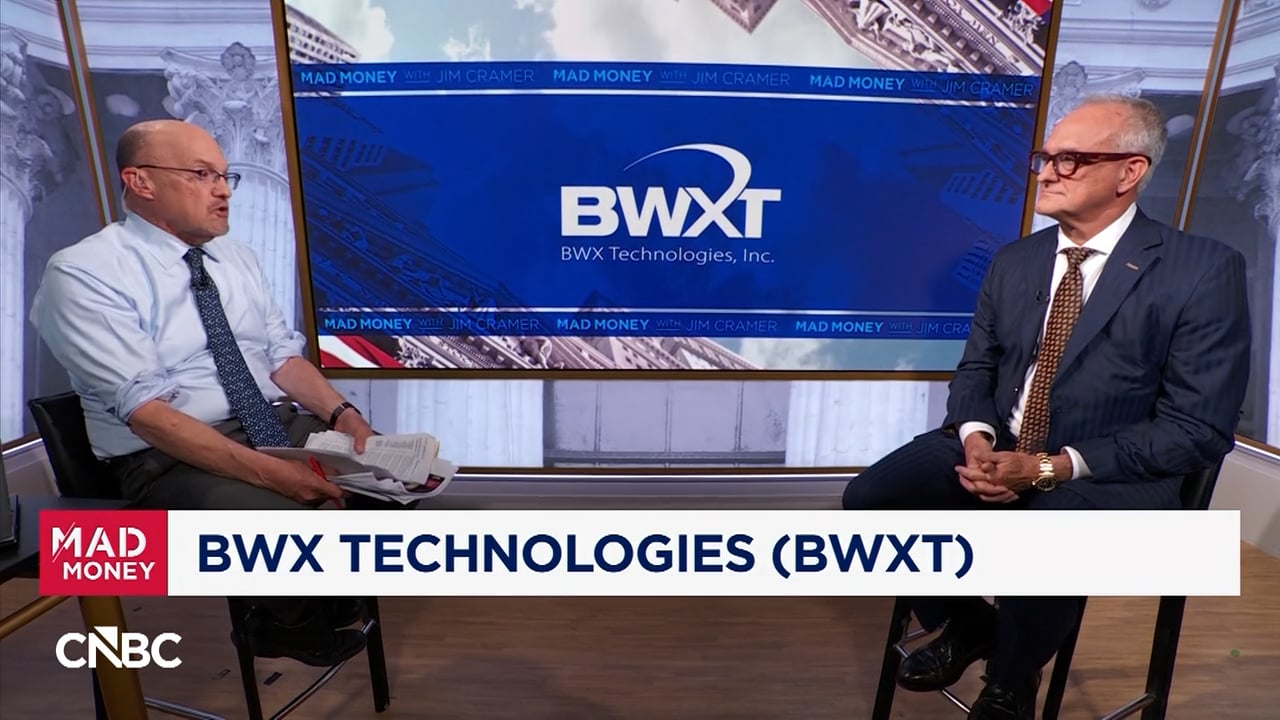
I was interviewed by CNBC’s Jim Cramer on Mad Money. Great timing with our earnings release after the market close.
BWXT reported very strong growth leading to record revenues and earnings for 2025 yesterday and published guidance for similarly strong growth in 2026. Further, our balance sheet is very healthy with capacity for acquisitions or other investments.
And the growth story is just beginning. We see demand and growth from the nuclear navy and nuclear utilities and continuing opportunities in nuclear medicine, special materials, microreactors, advanced fuels, and nuclear technical services.
That said, we are highly focused on executing against our robust backlog which doubled last year to $7.3B. Growing and running our business requires velocity and agility. Those aren’t just words at BWXT.
Last year we purchased land in Oak Ridge, Tennessee for our new Centrifuge Manufacturing Development Facility. And last month, we opened that facility for the Defense Fuels Program with NNSA. Seven months from empty field to purpose-built facility. We can move fast on nuclear projects, and we must.
As I mentioned to Jim during the interview we sit at the intersection of national security, energy security and AI. It is an extraordinary time for the industry, especially for BWXT given our talent, capacity, know-how, competitive positioning and history. Let’s go!
I invite you to watch the segment and let me know your thoughts.
Every major technology shift has a backbone. With AI, that backbone isn’t the algorithms or even the data. It’s energy.
AI data centers operate around the clock at extraordinary power densities. Global demand from these facilities is on track to more than double by 2030. In the United States, they could account for a meaningful share of total grid load, and that’s before we account for the next wave of AI acceleration. This is no longer just a computing challenge. It’s an infrastructure challenge.
And when you examine the requirements at scale, only one energy source meets all of them: Nuclear.
If the question is “why nuclear energy?” the answers are many:
As one analyst put it, AI doesn’t idle when the sun sets. Any nation that wants to lead in AI must secure dependable, clean baseload power. Nuclear is the only technology that provides that combination at scale.
You can see the trend line clearly in the private sector:
This is the largest private-sector reorientation toward nuclear power in history, and it’s being driven, unequivocally, by AI.
We are watching the formation of a new ecosystem where AI enables faster nuclear deployment, and nuclear energy enables larger, more capable AI systems.
The Microsoft–NVIDIA collaboration is a clear illustration: using AI and high-fidelity simulation to cut timelines, lower project risk and build a more standardized approach to nuclear deployment. It is exactly the kind of productivity leap the industry needs to match the speed of AI demand.
AI is advancing faster than today’s energy systems were built to support. If we don’t expand clean, firm, scalable power, and do it rapidly, we will constrain our own competitiveness.
Nuclear is the only technology that can deliver that foundation.
Winning in AI will require winning in energy.
And winning in energy means moving nuclear forward, decisively, and with urgency.
We are entering a critical period as the world accelerates investment in clean, reliable energy. According to the International Energy Agency, “more than 40 countries around the world have plans to expand nuclear’s role in their energy systems” and annual international investment in nuclear power may need to double to US$120 billion by 2030.
How will Canada invest further in this technology and win internationally?
Our decisions today will determine if Canada remains a nuclear leader and if Canadian workers, manufacturers, and innovators will capture a meaningful share of this growing global market.
Burgeoning interest in nuclear power makes sense. It offers an unparalleled solution to meet increasing electricity demand. Unlike many other zero-emission power sources, reactors reliably produce electricity in all weather and at any time of day, and they require relatively little land. With lifespans of 60 or 70 years, they offer economical lifecycle costs. And their supply chains can support energy independence.
So, as dozens of countries, including Canada, move quickly to expand nuclear power, they’re creating a wave of demand for the very technologies, components, and expertise in which this country already excels.
A distinct Canadian advantage is that Saskatchewan holds the world’s largest high-grade uranium deposits, making it one of the world’s key sources of nuclear fuel material. Much of that ore comes to Ontario to be safely processed into fuel for the reactors already providing more than half of the province’s electricity.
Canada also has a history of nuclear technology innovation and engineering prowess, including through internationally famous CANDU reactors.
Moreover, Canada is already one of the leading nuclear reactor component manufacturers globally. Hundreds of Ontario-based engineers, welders, pipefitters, and others are participating in the refurbishment of their province’s nuclear power stations by building 48 steam generators for Ontario Power Generation and another 32 for Bruce Power. They’re also building the heavy container for the reactor core of the country’s first small modular reactor near Bowmanville, ON. In an age when we’ve all become accustomed to the loss of factory jobs, we’re seeing the nuclear industry expand its manufacturing capacity in southwestern Ontario.
Canadians’ next step is to harness their advantage for both domestic needs and global opportunities. Coordination among provinces is especially important as Alberta, Saskatchewan, Ontario, and New Brunswick move toward new nuclear construction, with each potentially adopting different technologies.
The cornerstone of Canada’s nuclear approach needs to be thinking in terms of fleets of nuclear power stations, not one-off projects. While the industry could deal with a patchwork approach to new nuclear projects, commonality in technology and design would provide greater policy certainty to the industry. It would also be the most efficient way to build nuclear power capacity, enabling the industry to develop assembly line-type production and increasing Canadian workers’ expertise in this technology. What’s more, fleet-size construction is the best way to attract new investment in Canada’s domestic nuclear supply chain.
In the meantime, Canada’s nuclear industry needs faster environmental and regulatory reviews for new projects. This would allow Canadian industry to pick up new work while still meeting properly stringent regulations on shorter timelines and at lower cost. Clean manufacturing tax credits remain an important way to recognize that nuclear power replaces carbon-intensive electricity, creating green jobs.
Strengthening Canada’s domestic nuclear industry will help meet our growing domestic energy needs. After all, Canadian electricity demand is projected to grow by 62% between 2025 and 2050, according to one conservative estimate.
A beefed-up nuclear industry also supports Canadian energy independence. We can build the power stations and components, as well as mine and process our own nuclear fuel domestically. Few other power sources offer such nation-building advantages.
Getting this right sets up Canadian workers to compete for and win tens of billions of dollars worth of work at home and abroad. It’s a chance to diversify our exports and markets with Canadian nuclear technology and components.
But industry can’t do it alone.
Governments, industry, Indigenous leaders, and other decision-makers must come together to leverage Canada’s nuclear advantages. With abundant, clean, and reliable electricity, as well as good jobs, the nuclear industry can drive even more economic prosperity.