The world is entering a decisive era for clean and reliable energy. More than 40 countries are looking to expand nuclear power, and global investment may need to double to more than US$120 billion annually by 2030.
The question for Canada is whether we intend to lead growth or be left behind. The federal government’s new Nuclear Energy Strategy signals that Canada intends to lead, but national leadership will not be enough unless provinces join that effort with purpose.
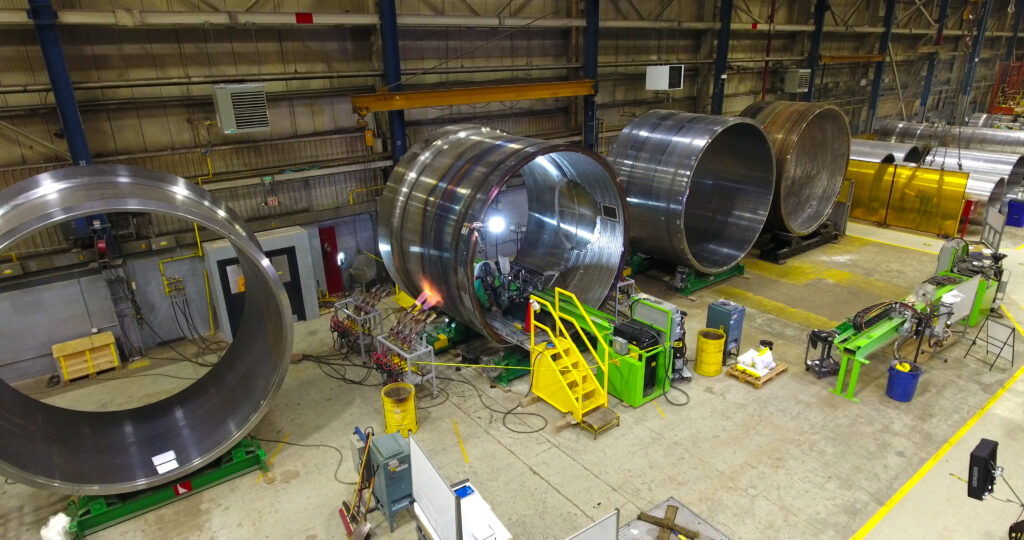
Canada has everything it needs to compete at the front of this global wave. We have high-grade uranium in Saskatchewan, fuel processing and major component manufacturing in Ontario, and a highly capable workforce. Few countries have this kind of integrated capacity.
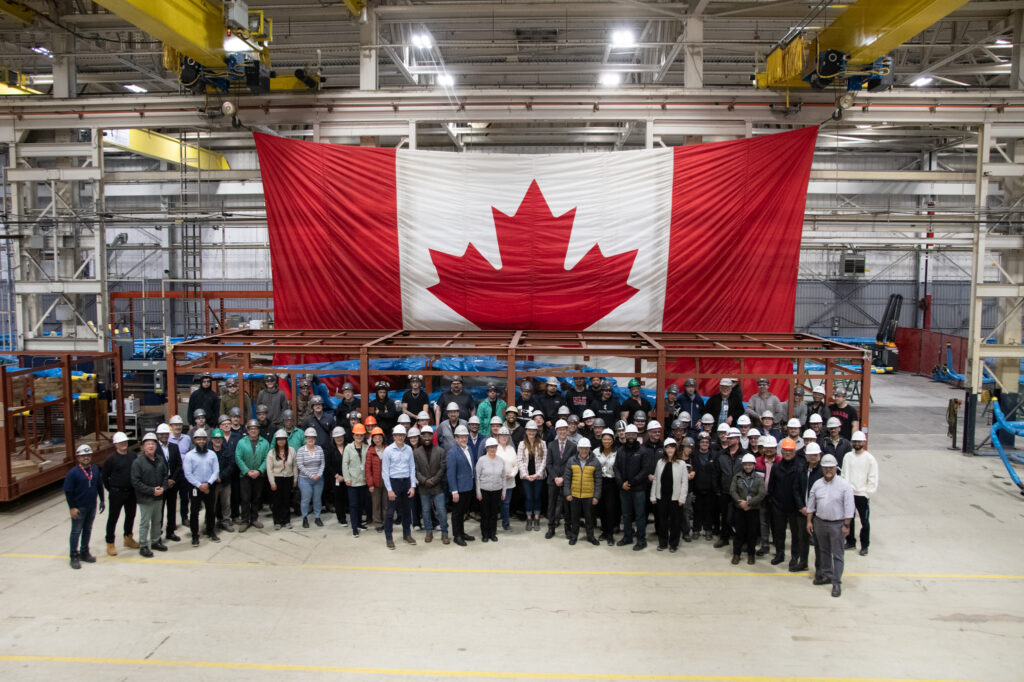
The value of Canada’s nuclear supply chain is often reduced to a number, usually the approximately 100,000 people it employs. Of course, jobs matter. But the true value of Canada’s nuclear industry is sovereign control over one of the most strategic technologies in the world.
We do not maintain a navy because it employs a lot of people. We maintain it because sovereign countries with coastlines need one. Likewise, we should not measure the value of an advanced nuclear industry by counting workers. We should measure it by asking whether we want to remain one of the few nations that can design, build, install and service nuclear reactors.
Nuclear power provides over half of Ontario’s electricity and roughly 15 percent of Canada’s overall power. Manufacturers, mines, AI data centres, farms, transit systems and hospitals all depend on this reliable power.
Canada’s nuclear industry also creates disproportionate economic value. Its workers hold among the highest-value manufacturing and engineering jobs in the country. They support key technologies and skills for the future including advanced welding, metallurgy, robotics, forgings, digital manufacturing, controls, software and precision machining.
In addition, the nuclear supply chain that keeps reactors running underpins the infrastructure that keeps the modern economy operating also drives significant exports. Canada is one of a very small number of countries that can deliver nuclear technology from fuel to components to reactor services. Treating this asset as something that can be outsourced is a serious mistake.
Nuclear capabilities are essential for energy security. Reactors last 60 to 100 years. A country that relies on foreign suppliers to maintain them risks losing control of critical infrastructure. Domestic capability ensures that life extensions, refurbishments, component manufacturing and emergency response remain in Canadian hands. We would never give up the domestic ability to maintain our naval fleet. Why would we do so for our nuclear fleet?
Just as important, this is a platform for future growth. The same supply chain that delivers today’s reactors positions Canada to compete globally in emerging technologies like small modular reactors (SMR), medical isotopes, fusion components and clean energy exports. Protecting our capability today is how we create tomorrow’s industries.
This brings us back to the federal Nuclear Energy Strategy. It lays out a serious vision for national ambition, but success now depends on the provinces. Ontario is advancing some of the most significant nuclear projects in the world. Saskatchewan and Alberta are exploring new technologies. New Brunswick has long-standing expertise and emerging SMR potential. Quebec and Nova Scotia rely on electricity systems that will need serious reinforcements to meet climate and reliability targets. Yet without coordination across provinces, Canada risks diluting its advantage.
A fragmented approach spreads resources too thinly and drives up costs. A coordinated national effort, supported by provinces working toward common technology choices and project structures, gives Canada the scale to compete globally. Fleet-style deployment allows companies to invest with confidence, build assembly-line manufacturing capacity and improve workforce training.
The sovereign, strategic choice for Canada is to maintain a domestic nuclear supply chain. We simply cannot afford to lose this globally rare advanced industrial capability. While importing nuclear tech may appear cheaper in the short term, it would also eliminate the domestic capability to keep our reactors running and our economy powered.
Canada has a rare opportunity, but it needs to be an all-hands, all-provinces effort. If we act with unity, we can secure clean electricity, protect sovereign capability and strengthen one of the most valuable industrial assets in the country.